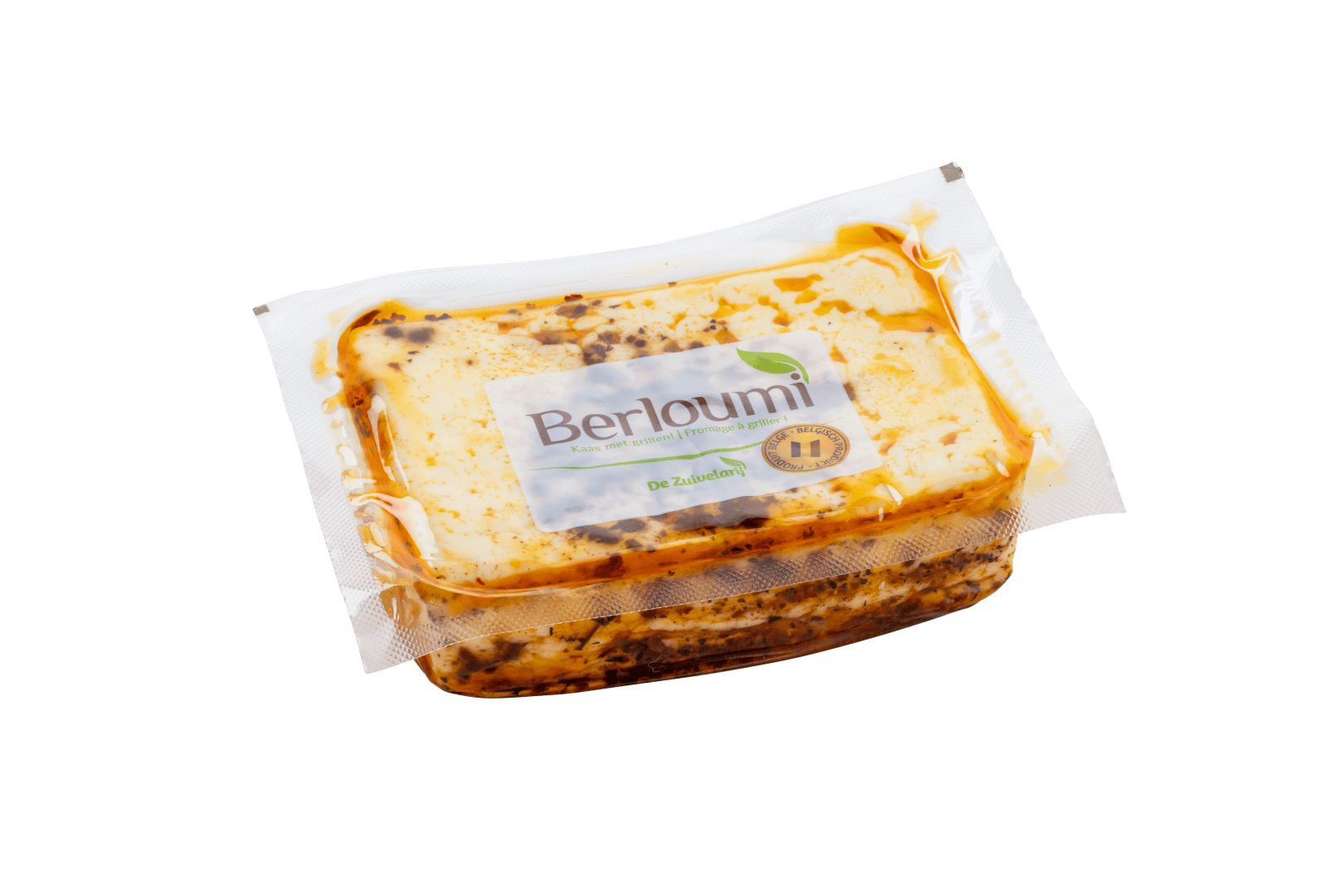
Gemiddelde voedingswaarde per 100 gram
| Energie | 340 kcal / 1409 kJ |
| Vetten | 28,3 |
| waarvan verzadigde | 20,3 |
| Koolhydraten | 2,8 |
| waarvan suikers | 2 |
| Eiwitten | 18,9 |
| Zout | 2,25 |
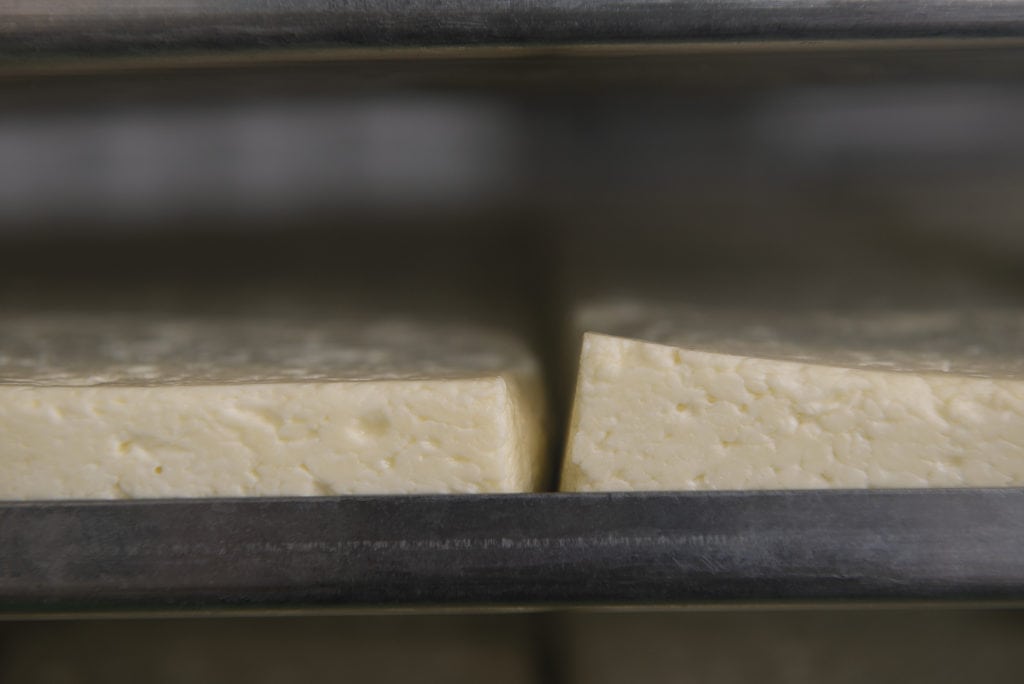
Ingrediënten: gepasteuriseerde koe-en schapenmelk, koolzaadolie, zout, zuurteregelaar (E575), vegetarisch stremsel, chilipeper, munt, conserveermiddel (E202).
Allergenen: melk, kan sporen van mosterd bevatten.
Is Berloumi gezond?
Natuurlijk is Berloumi gezond! Maar in onze Zuivelarij zijn we voornamelijk bezig met de smaak. Onze Berloumi is rijk aan eiwitten, vetten, mineralen en vitamines. Goed nieuws: je kan onze Berloumi gerust eten als je zwanger bent, want zowel de melk als de kaas zelf zijn gepasteuriseerd. Voor personen met lactose-intolerantie is er minder goed nieuws: Berloumi bevat namelijk nog alle lactose omdat de melk niet verzuurt tijdens het productieproces.
Koe-en schapenmelk
Onze koemelk komt van de Berlaarse boerderij van Koen & Annick. Afhankelijk van het seizoen vullen we aan met wat schapenmelk van de boerderij van Gert & Leen, de boeren die ook zorgen voor de melk die we gebruiken voor onze labneh.
Stremsel
We gebruiken microbieel aangemaakt stremsel, en dus geen dierlijk, waardoor Berloumi ook geschikt is als vegetarisch alternatief.
Zout
Berloumi bevat, zoals alle kazen, veel zout. Tussen 2 en 2,5 gram per 100 gram kaas. Die hoeveelheid is nodig voor het productieproces: het zorgt voor de gewenste textuur, smaak en verhoogt ook de houdbaarheid. Berloumi wordt zelfs nog iets zouter als je hem gaat bakken aangezien er vocht ontsnapt en er zich een lekker zout korstje vormt.
Calciumchloride
Calciumchloride is het calciumzout van zoutzuur. Dat klinkt gevaarlijk, maar in feite wordt het gewoon gebruikt om de natuurlijke calciumbalans van melk te herstellen. Dat is nodig omdat melk de dag van vandaag beter en langer gekoeld wordt. Calciumchloride is een stof die in de natuur voorkomt en je trouwens ook terug vindt in voedingssupplementen, want het is een bron van calcium. We voegen dus gewoon een beetje meer toe dan wat er van nature al in melk zit.
Kruiden
Gluconzuur
Gluconzuur verkrijg je dankzij de oxidatie van glucose. Het zuur wordt technisch geproduceerd, maar ook deze stof is natuurlijk. Micro-organismen zetten de natuurlijke suiker in glucose om in gluconzuur. Je vindt het ook terug in honing en gegiste vruchtensappen. Het stofje komt in de kaasbereiding handig van pas omdat het de melk langzaam en gecontroleerd laat verzuren.
Berloumi bewaren in ongeopende verpakking
Berloumi kan je goed bewaren. Vanaf de productiedatum blijft een gesloten pakje Berloumi minstens twee maanden goed. Je moet hem natuurlijk wel gekoeld bewaren. Onze Berloumi is iets minder lang houdbaar dan andere grillkazen. Dat komt omdat onze kaas minder zout is en marinade bevat. Maar waarom zou je een pakje Berloumi lang bewaren? Hij is te lekker om te laten liggen!
Berloumi bewaren in de geopende verpakking
Wanneer je een pakje Berloumi opent, kan je hem ongeveer een week bewaren. Wikkel hem in keukenpapier. De kaas droogt een klein beetje uit, maar dat is niet erg. Hij behoudt zeker zijn smaak. Wanneer de kaas plakkerig aanvoelt, eet je hem beter niet meer op.
Kan je Berloumi invriezen?
Je kan Berloumi ook invriezen. Wanneer je niet alles tegelijkertijd wil opeten kan je de kaas ook voor het invriezen in plakjes snijden. Zo kan je enkel de porties ontdooien die je wil bakken. Op die manier ontdooit de kaas ook sneller.